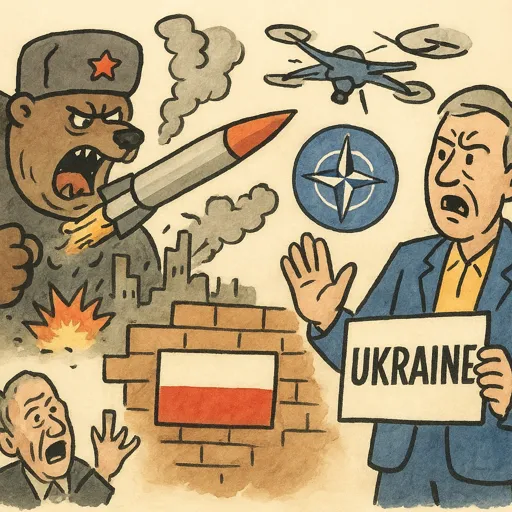
Russian forces have mounted large, sustained missile and drone offensives across Ukraine, striking cities, transport links and energy infrastructure and inflicting heavy civilian casualties. Several munitions and drones have crossed into Polish territory, prompting investigations, NATO scrambling and heightened fears of wider escalation. The strikes follow and fuel tit‑for‑tat operations around the Crimea Bridge, with Moscow promising harsh responses and Kyiv warning of continued attacks. International leaders and organisations have responded with condemnation, calls for emergency UN action, political rhetoric and intensified humanitarian appeals.
Polish authorities and leaders portray strikes that landed on Polish territory as likely intentional provocations timed with allied military exercises, prompting air defences and NATO jets to be scrambled. Allies are investigating impact sites, video footage and trajectories while warning the incident risks wider escalation along NATO’s eastern flank.
A barrage of missiles and drones has battered urban areas across Ukraine, destroying bridges, damaging rail hubs and killing and wounding dozens of civilians, with leaders calling the attacks among the largest of the war. The scale of the strikes compounds humanitarian needs and strains local emergency and rescue services as Ukraine and partners document casualties and damage.
The strike on the Crimea Bridge has become a focal point for retaliation narratives: Kyiv has been linked to the attack while Moscow vows painful response and reconstruction, and both sides use the episode to justify further operations. Analysts and officials warn the bridge incident raises the stakes strategically and politically, reducing prospects for near‑term ceasefire talks.
International leaders and governments have reacted strongly — from calls for emergency UN Security Council meetings to public comments minimising or politicising incidents — shaping perceptions and alliance responses. Rhetoric from Washington, Paris, Kyiv and Moscow is influencing diplomatic pressure, military planning and public narratives about responsibility and escalation.
UNICEF and UN monitors report that more than a thousand children have been killed or injured this year, and civilians continue to shelter in metro stations as strikes hit residential areas. The conflict’s humanitarian ripple effects include legal disputes over evacuated children and urgent winter and relief assistance needs across affected oblasts.
The war’s reach extends to embassy precincts and maritime routes: drone explosions near diplomatic missions, a drone attack on a Dutch mission, a strike on a Turkish vessel and allegations of targeted attacks tied to Russian direction raise alarms about covert and asymmetric actions. States involved publicly dispute responsibility while probing security and legal implications.
Rapid live reporting and dedicated fact‑checking pieces aim to verify claims, counter misinformation and provide chronological updates as the situation evolves. Media tracking of strikes, trajectories and official statements remains central to international understanding and policy responses.