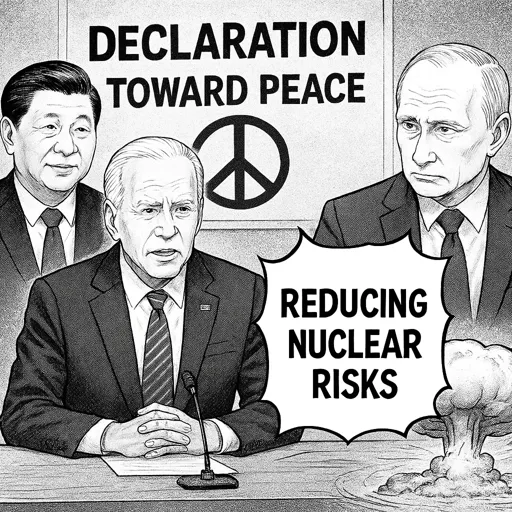
Leaders of the United States, China and Russia met in an unprecedented trilateral summit that produced a joint “Declaration Toward Peace” and public commitments to strategic stability. Coverage emphasizes agreed language on reducing nuclear risks and the shared assertion that nuclear war must not be fought, while concrete verification or implementation steps remain vague. The summit reignited debate over Ukraine and whether European actors will have a central role in any negotiated outcomes, even as several reports note notable omissions from the formal agenda. State media, domestic political spin and analysts offer competing narratives about whether the talks mark a genuine shift toward multipolar rulemaking or mainly a symbolic diplomatic milestone.
Straight reporting from many outlets highlights the issuance of a joint peace declaration and characterizes the Shenzhen meeting as a historic, rare trilateral alignment aimed at reducing tensions. These pieces underscore the diplomatic significance of the talks while noting that declarations were largely political and often lacked detailed, binding measures.
Several reports emphasize leaders’ commitments on nuclear risk reduction and strategic stability, including explicit language that nuclear war must not be fought and calls to cut arsenals. Coverage frames these statements as politically significant but notes scant detail about verification, timetables or concrete arms-control mechanisms.
A cluster of stories focuses on whether the trilateral talks could affect the Ukraine war and how European nations figure into any process, with some pieces reporting discussion points and others stressing Europe’s marginalization. Reporting ranges from hopeful suggestions that the three powers could influence outcomes to warnings that Ukraine and other conflicts were left partly off the formal agenda.
These reports cover adjacent security topics raised around the summit: talks about the Korean Peninsula, claims about influence in Venezuela, and controversies over immunity for state officials and the International Criminal Court. They present a patchwork of security concerns showing the summit’s regional reverberations beyond the headline declaration.
State and domestic outlets frame the summit through divergent national lenses: Chinese and Russian media often hail the meeting as historic or vindicating, while US-oriented coverage highlights political optics and leadership ties. Several pieces capture how leaders and governments sought to shape narratives at home even as the international implications were debated.
Opinion and analysis pieces urge caution about reading the meeting as a definitive reordering of global power, arguing that rhetoric may outpace durable policy shifts and that complex rivalries remain. Commentators weigh the possibility of a more multipolar rulemaking role for the three powers against the practical barriers to sustained cooperation.
A smaller set of reports focuses on the ceremonial and human aspects of the gathering — arrivals, protocol breaches and the summit’s conclusion — using gestures and anecdotes to signal diplomatic tone and intent. These accounts emphasize choreography and symbolism as part of how the meeting was received and interpreted.