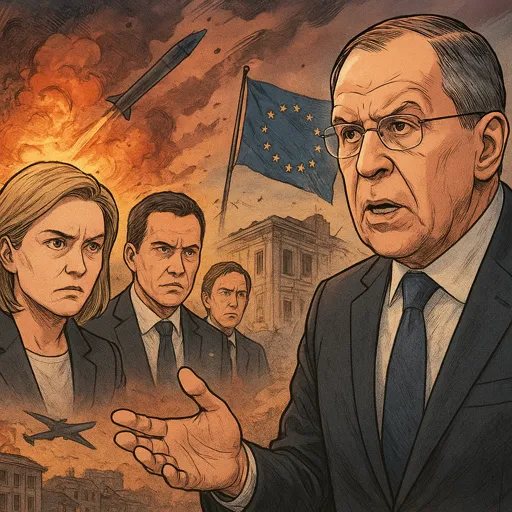
Lavrov's quip highlights renewed tensions between Moscow and European capitals, reflecting a brittle mix of outreach and antagonism. European states have responded with expulsions, visa curbs and preparations for expanded sanctions while probing alleged covert Russian operations on their soil. Incidents involving missiles and drones in Poland and damage to diplomatic premises have raised the risk of inadvertent escalation even as Moscow invites Europeans for talks while rejecting NATO-style guarantees for Ukraine. The overall posture is therefore contradictory: rhetorical openness to negotiation coupled with aggressive actions and hardened domestic narratives that make durable diplomacy fragile.
Danish and other European outlets portray recent expulsions as a response to suspected Russian clandestine operations and hybrid warfare on EU territory. Moscow denies the allegations and frames Western moves as hostile, deepening bilateral mistrust.
Polish authorities and regional partners present the landings and crashes of Russian missiles and reconnaissance drones as dangerous provocations that have triggered NATO responses and investigations. These incidents are depicted as heightening the risk of escalation and testing alliance readiness.
Russian officials frame invitations to European delegations as a genuine offer to explain Moscow's position and open talks, while simultaneously rejecting NATO-modeled security guarantees for Ukraine. European leaders react with skepticism, treating the outreach as tactically mixed with ongoing military pressure.
Estonia and neighbouring Baltic states present border closures and tighter controls as precautionary security measures in response to regional tensions with Russia. Officials warn of operational strains on border services and disruptions to cross-border traffic.
Romanian visa refusals for Russian athletes are framed by Bucharest as a sovereign security and policy decision, while Moscow condemns the actions as 'Russophobia' and lodged formal protests. The exchange underscores how sports and consular issues are being politicized into broader bilateral disputes.
Austria summoned the Russian ambassador after damage to its embassy in Kyiv, demanding explanation and accountability and treating the incident as a serious diplomatic breach. Vienna's démarche is portrayed as part of a wider pattern of Western protests over actions tied to the Ukraine conflict.
European leaders, from Paris to Copenhagen, warn of a 'new level' of Russian aggression and are preparing expanded sanctions lists and visa restrictions in response to recent incidents. Brussels and several capitals emphasize growing unity and readiness to penalize Moscow despite earlier divisions.
Pro‑Moscow commentators and officials use pointed rhetoric that rejects conciliatory framing and emphasizes hierarchical or nationalistic themes, reflecting hardened narratives within Russia's information space. Such language helps sustain a confrontational posture that complicates diplomatic rapprochement.