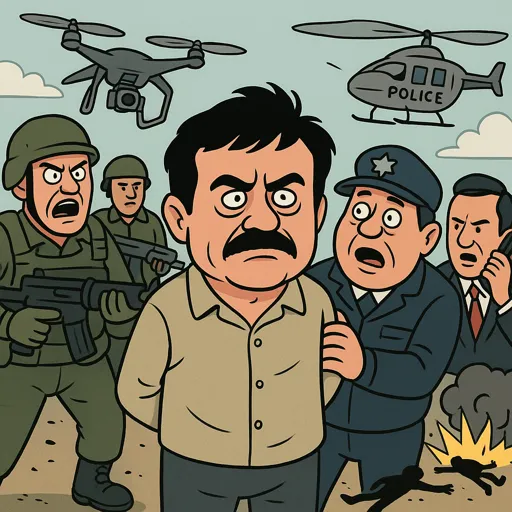
Mexican security forces mounted a major operation that resulted in the capture of Fausto ‘El Chapo Isidro’ Meza Flores, using surveillance tools and coordination with international partners. Reporting highlights both the sophistication of the manhunt—drones, wiretaps and intelligence sharing—and the violent consequences of the raid, with multiple sources citing deaths of soldiers, suspects and civilians. Coverage combines tactical descriptions, profiles of the fugitive and assessments of the arrest’s impact on cartel dynamics. Separate incidents, including killings of relatives of Rafael Caro Quintero, underscore continuing cycles of reprisal and insecurity even as authorities target kingpins. U.S. agencies and Mexican authorities figure prominently in the aftermath and response.
Reporting emphasizes sophisticated surveillance and coordinated action—drones, wiretaps, helicopters and a named 'Kingpin Removal' operation—often with U.S. intelligence support. These accounts present the arrest as a planned, high-profile operation demonstrating enhanced capabilities to locate and seize fugitive cartel leaders.
Many sources focus on the deadly cost of the operation, reporting varying tallies that include soldiers, cartel gunmen and civilians. Coverage underscores the human toll and the violent instability that can accompany efforts to apprehend top cartel figures.
Several articles profile 'El Chapo Isidro', outline his role in cartel rivalries and place the arrest in the context of Mexico’s broader crackdown on organized crime. Analysts suggest removing a high-ranking fugitive will disrupt trafficking operations but may also trigger power struggles and short-term instability within cartel networks.
A set of reports documents targeted shootings of relatives and associates of Rafael Caro Quintero across Mexican states, highlighting ongoing reprisals and inter-cartel violence. These incidents are presented as part of the persistent insecurity that continues even as authorities pursue major cartel leaders.
Coverage notes the role of U.S. agencies—from FBI designations to DEA condolences—and emphasizes cross-border cooperation in the manhunt and its legal ramifications. Reporting frames the capture as both a law-enforcement milestone and a diplomatic-security event with international attention.