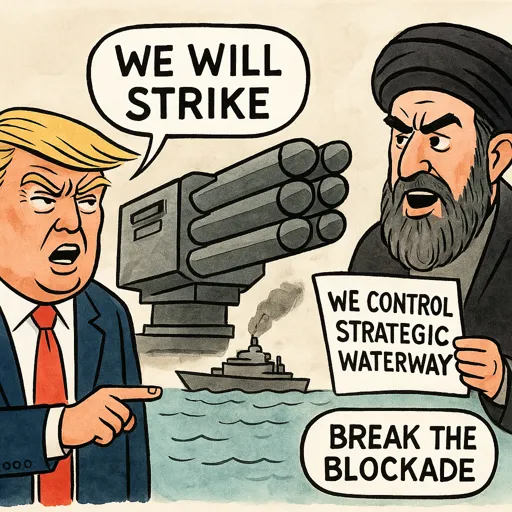
Coverage captures escalating public antagonism between Tehran and Washington: U.S. political leaders, notably Donald Trump, publicly blame Iran and domestic opponents while warning of renewed action. Iranian statements and state-linked claims boast of strikes on U.S. assets, assert control over strategic waterways and vow to break blockades. Regional bodies and neighbours condemn attacks on civilian and industrial targets, and live reporting highlights wider cross-border tensions involving Israel. Iran’s unveiling of new launchers and reporting of covert operations underscore a mix of overt military signaling and deniable tactics that complicate diplomatic responses.
U.S. domestic leaders—principally former President Trump—frame recent escalations as driven by Iran and blame political opponents, linking the incidents to oil prices and election narratives. Statements also include warnings of resumed U.S. action after the New Year and portray a tough posture as necessary for national security.
Iran and its proxies publicly claim attacks on U.S. assets and infrastructure, portraying Tehran as able to outlast opponents and to operate offensively in the Gulf. Reports link these claims to immediate security risks and potential impacts on energy markets, though many specific incidents lack independent verification in the coverage.
Regional assemblies and neighbours condemn Iranian actions that allegedly targeted civilian or industrial facilities, framing them as violations of international norms. Live regional coverage also tracks spillover tensions—particularly involving Israel—and diplomatic concern over stability in the Middle East.
Iran’s unveiling of new missile and rocket launchers is presented as deliberate signaling intended to intimidate opponents and demonstrate advancing capabilities. Observers frame these displays as part of Tehran’s broader deterrence and messaging strategy.
Tehran asserts strategic autonomy—claiming control of the Strait of Hormuz and readiness to break blockades—while noting backing or diplomatic positions from powers like Russia and China. Investigative reporting on alleged IRGC use of sham passports highlights covert methods that accompany Iran’s public strategic and diplomatic posturing.