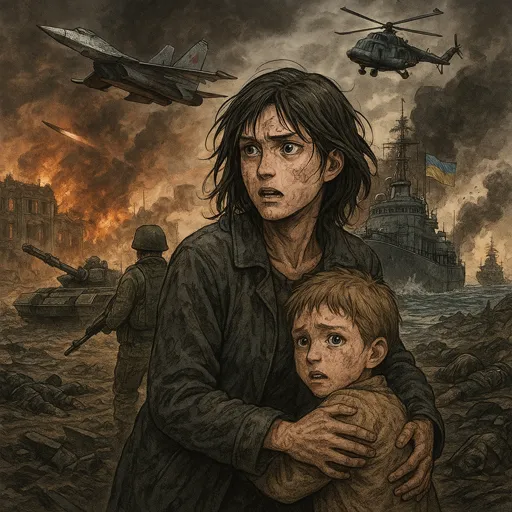
Russian attacks continue across land, sea and air as the conflict broadens beyond traditional frontlines. Intensified strikes have caused civilian casualties and damaged critical infrastructure, while Ukraine has also claimed a series of maritime operations that push the war into the Mediterranean, North Africa and the Baltic. Multiple media reports and leaked data offer contested, high casualty estimates that underscore the conflict’s severe human cost and political impact. International institutions and leaders warn of regional spillover and call for sustained humanitarian support and preparedness.
Numerous reports focus on Ukraine’s use of sea drones and strikes against Russian vessels off Libya and elsewhere, portraying a widening naval dimension to the war. Many of these accounts are based on Ukrainian claims and media imagery, with independent verification often lacking, raising concerns about maritime security and regional spillover.
Coverage documents repeated Russian strikes on cities and towns—especially around Kyiv, Dymer and Zaporizhzhia—resulting in civilian deaths, damaged housing and energy infrastructure. Reports also note growing drone use that pushes fighting westwards and targeted strikes on communications and logistics, highlighting the acute humanitarian impact and local emergency responses.
A cluster of media reports, statistical projections and hacked data claim very large Russian military losses, with figures ranging widely and sometimes exceeding half a million. These numbers are often contested or unverified, but they are treated as politically and socially consequential, affecting public sentiment and international discourse about the war’s scale.
Political and institutional voices warn of further strikes, potential regional expansion, and worsening humanitarian conditions; Zelenskiy and other Ukrainian officials cite intelligence of new Russian plans and have publicly framed Putin as the central adversary. The UN and other actors call for vigilance, humanitarian access and international support, while some military commanders question the quality of information reaching Russian leadership.