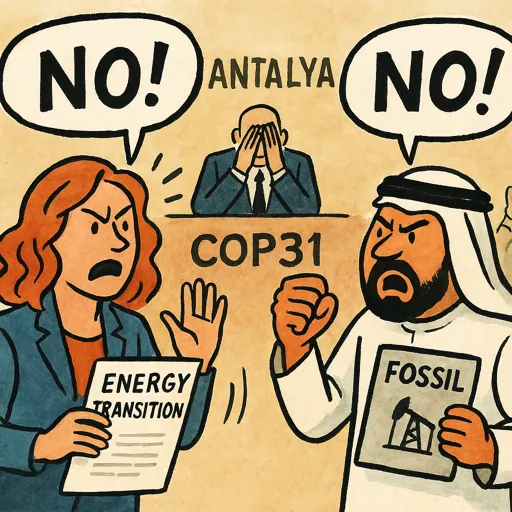
COP31 in Antalya ended without a unified agreement as sharp divisions over fossil fuels and energy transition language prevented consensus. Oil-producing states and influential delegations resisted explicit references to phasing out hydrocarbons, prompting EU rejection and broad disappointment from negotiators and the UN. The stalemate produced diplomatic fallout and domestic political pressure in some countries, even as smaller delegations and vulnerable states highlighted practical climate finance and resilience initiatives. Despite the failure at the plenary level, bilateral pacts and side events showcased cooperation on carbon storage, energy access and capacity-building.
A core fault line at COP31 centered on language about fossil fuels, with oil-producing states—and influential delegations—blocking explicit phase-out text and shaping the final draft. Negotiators and observers warned that this resistance, including noted influence from major hydrocarbon exporters, undermined the prospects for a strong, consensus Antalya Pact. The impasse illustrated how geopolitics and energy security calculations continue to complicate multilateral decarbonization efforts.
The conference concluded in a broadly perceived failure as delegates left without a joint closing declaration, triggering blame, political pressure and high-level disappointment. UN leadership and many delegations expressed alarm that the stalemate could derail momentum on emissions cuts, finance and adaptation, while some ministers faced domestic scrutiny. The chaotic end underscored weaknesses in current negotiation dynamics and the difficulty of securing ambitious global commitments.
Many developing countries and some domestic political actors framed the outcome through the lens of finance, equity and national priorities, criticizing inadequate commitments on funding and adaptation. Delegations such as Burkina Faso defended their needs and negotiating positions, while civil society and political groups called for stronger financing and clearer action on fossil fuels and carbon management. Persistent disagreements over finance and technical measures left vulnerable countries worried about delayed assistance and implementation.
Small island states used COP31 platforms to showcase practical climate solutions and build negotiating capacity, from Vanuatu’s National Green Energy Fund to a Memorandum of Understanding for 3,000 solar streetlights. Youth negotiators and capacity-building programs were highlighted as ways to strengthen the voice of vulnerable nations in future talks. These side events signaled concrete progress on resilience and access even as global consensus faltered.
Alongside the diplomatic impasse, countries pursued pragmatic bilateral measures—such as a Singapore–Australia pact and a landmark carbon storage agreement—to bolster resilience and emissions management. Arctic and small-state representation at the talks, including Greenland’s delegates, provided symbolic reminders of the varied stakes and perspectives present in global climate diplomacy. Such practical and representational efforts contrasted with the broader failure to produce a unified pact.