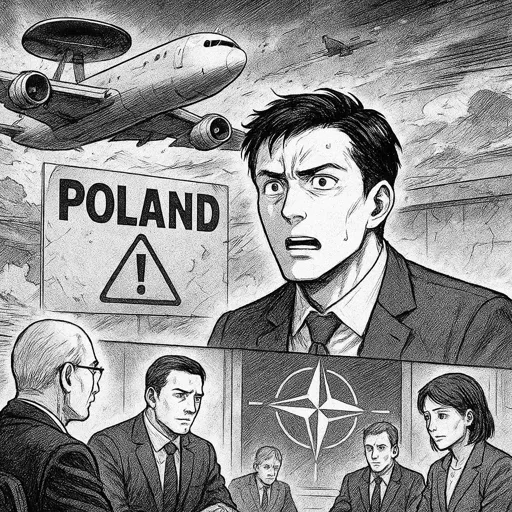
NATO has stepped up surveillance and reassurance for Poland following multiple airspace incursions and the discovery of missile debris, deploying AWACS and other reconnaissance assets to strengthen early warning and deterrence. Polish authorities reported repeated drone violations and temporary air alerts in southeastern regions, prompting investigations and public alarm but no confirmed casualties. The alliance has publicly blamed Russia for the violations while allies and Ukrainian leaders call for expanded air defenses and continued support. These events have spurred broader regional responses—from civilian anxiety to policy shifts on border hardening and defence cooperation—underscoring persistent tensions on NATO’s eastern flank.
Polish and regional outlets describe repeated drone and missile-related incursions that triggered air-attack alerts in border regions, with authorities releasing footage, investigating debris, and in one report deciding to shoot down a drone. Coverage focuses on immediate security impacts and civilian alarm while noting no confirmed casualties at the time.
NATO has deployed AWACS and radar aircraft and sent at least one military plane to Poland to enhance early warning, surveillance and deterrence after missile debris and airspace violations. Reports frame these moves as precautionary security reinforcements to monitor threats and bolster regional intelligence-sharing rather than as direct escalation.
Allied officials and NATO have formally blamed Russia for the airspace violations, while Western defence ministers and Ukraine’s leadership are urging stronger defensive measures and support. Commentary from UK and Ukrainian leaders emphasizes deterrence, criticism of Moscow, and appeals for additional air-defence systems.
The incidents are prompting broader European policy reactions—from civilian anxiety in nearby regions to debates about hardening borders, and expanded defence cooperation such as AI initiatives among EU partners. These items show NATO’s Poland deployments fit into a wider strategy of strengthening preparedness and deterrence across the alliance’s eastern flank.