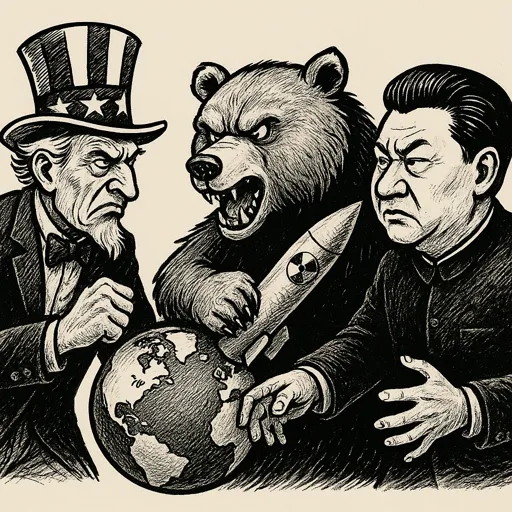
Competition among the United States, Russia, and China is reshaping security dynamics across multiple theaters, from the Indo‑Pacific to the Mediterranean and Africa. Moscow’s escalating rhetoric and Moscow‑related actions risk nuclear brinkmanship and regional spillovers, while Beijing’s growing naval and technological capabilities challenge existing deterrence and arms‑control assumptions. European political realignments and wavering public faith in alliances complicate coordinated responses, and rising influence campaigns in the Global South extend the rivalry into new strategic spaces. The combined effect is a more fragmented, multipolar contest with heightened risks of local conflicts cascading into broader strategic confrontations.
Senior Russian officials’ warnings and Kremlin‑linked statements amplify fears of deliberate nuclear signalling, elevating the stakes of the Ukraine conflict beyond conventional warfare. Western and regional commentators frame such rhetoric as a destabilizing lever that complicates deterrence, crisis management, and the case for restrained escalation.
Attacks on Russian vessels and Ukrainian strikes beyond the Black Sea indicate the Ukraine war’s spillover into the Mediterranean and North Africa, threatening maritime security and regional stability. European and local actors are responding with heightened naval deployments and diplomatic attention as the fighting projects into new theaters.
Domestic politics across Europe — from Slovakia’s pro‑Russia leadership to German public reluctance to choose between Washington and Beijing — are reshaping alliance cohesion and policy responses to great‑power competition. Energy politics and debates over Moldova‑Romania ties further expose how internal debates influence external alignments and strategic calculations.
China’s advances in blue‑water capabilities and anxieties about US AI‑enabled strike options reflect a rapid transformation in regional deterrence and military planning. East Asian states, including Japan and South Korea, are recalibrating diplomacy and defence postures in response to both Beijing’s rising leverage and signals of changing US global leadership.
Middle Eastern and Global South diplomacy, from the UAE’s outreach in the Comoros to France’s operations in the Mozambique Channel, shows great powers contesting influence far beyond traditional battlegrounds. At the same time, warnings about conflict spreading to the Baltics and critiques of US military and economic posture raise questions about alliance credibility and the ability to deter opportunistic challenges.