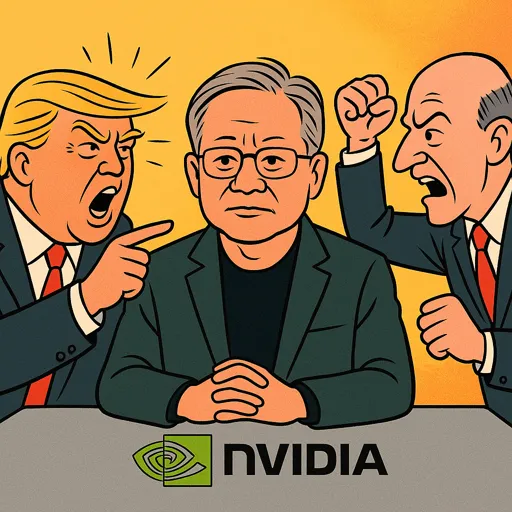
Nvidia's board reinstated CEO Jensen Huang amid intense political pressure and claims of direct intervention by former President Trump and allied figures, prompting debate over political influence on corporate governance. The episode combined high-level lobbying with provocative public messaging, including AI-generated images shared by Trump, and attracted criticism from US lawmakers. Nvidia has pushed back on national security concerns while markets and employees reacted swiftly, underscoring the firm's centrality to the AI industry. The affair illustrates growing regulatory and reputational risks for major tech companies caught between political actors, national security debates, and shareholder expectations.
Multiple reports describe direct political intervention—by Trump, his allies and figures like JD Vance—to secure Huang’s return, framing the reinstatement as driven by outside pressure rather than purely board governance. These accounts raise questions about the boundary between government actors and private corporate decision-making and feed political narratives of vindication.
Coverage emphasises Nvidia’s rapid reversal, management framing of no national security risk, and the return’s effects on investor confidence and internal morale, with employees reportedly welcoming Huang back. The narrative focuses on leadership continuity amid a looming spy scandal and the company's pivotal role in the AI chip market.
Trump’s sharing of AI-generated images and memes featuring Huang provoked controversy and amplified public and political backlash, while lawmakers criticised the reinstatement decision. The combination of sensational social media posts and congressional scrutiny highlights the reputational pressures tech firms now face in politically charged environments.