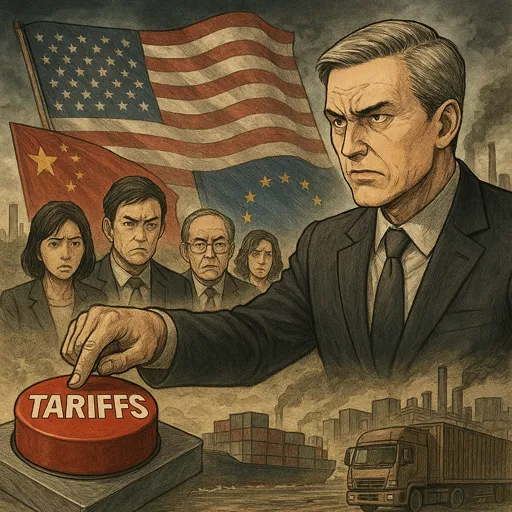
The United States has announced new tariffs targeting China, the European Union and a range of other trading partners, reflecting a broad cross‑regional protectionist turn in trade policy. Reports vary on scope and rates, citing proposals affecting up to 14 partners with rates reported between roughly 10% and 40% in different outlets. A range of governments have expressed disappointment or indignation and are weighing negotiations or mitigation measures, while analysts warn of higher prices and disrupted supply chains. The measures are framed by U.S. officials as regulatory steps to address overproduction and unfair subsidies, but they also carry clear political and diplomatic implications.
Multiple outlets report factual government announcements that the U.S. will impose tariffs on imports from China, the EU and a dozen other partners. Coverage centers on the scope, timing and procedural details—number of countries affected and proposed rate ranges—presenting the moves primarily as regulatory actions to curb excess production.
Affected partners have voiced disappointment or indignation and are exploring responses ranging from negotiation to limited countermeasures; some economies expect uneven exposure depending on exemptions. Economists and trade officials warn of potential supply‑chain disruptions and price pressures, while countries such as Singapore and Thailand are publicly assessing ways to reduce the tariff impact on exporters.
Several reports emphasize the protectionist and political framing of the tariff push, linking it to the Trump administration’s broader trade agenda and domestic political dynamics. Coverage highlights proposed percentage increases, legal and policy drivers (including recent court developments mentioned in some reports), and the possibility that tariffs will be used strategically in negotiations.