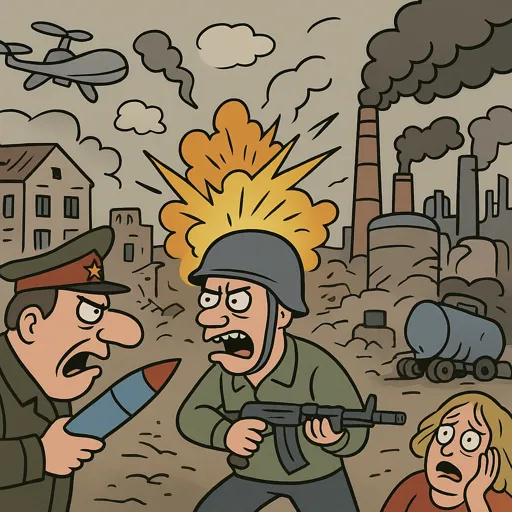
Russian air and missile strikes continue to hit Ukrainian cities and critical infrastructure, causing civilian injuries and material damage. Ukraine has mounted cross‑border attacks on Russian military and industrial targets, including air bases, refineries and fertilizer plants, and claims substantial equipment losses. Energy systems on both sides are strained — with Ukrainian blackout risks and Russian fuel shortages — intensifying humanitarian needs. The growing use of drones and novel weapons raises the danger of further escalation and regional spillover.
Reports emphasize renewed Russian aerial and missile assaults on urban areas, citing damage to shopping centers, bridges and other civilian sites and multiple injuries. Coverage highlights the immediate humanitarian impact and calls for de‑escalation from the international community.
Reporting highlights Ukrainian long‑range strikes and drone operations that allegedly damaged Russian air bases, multiple aircraft and industrial facilities, including refineries and fertilizer plants. Several accounts stress the blows to Russian military capability and supply chains, though some claims remain unverified.
Coverage focuses on widespread damage to power and gas networks, risk of outages in regions like Odesa, and the broader civilian hardships caused by the fighting. Reports note appeals for humanitarian assistance and underline the cumulative toll of reciprocal strikes on communities.
Articles document evolving tactics — from jet‑powered and kamikaze naval drones to strikes at sea — showing how new weaponry is changing the battlefield and generating fatalities and diplomatic tensions. Observers warn these methods increase the risk of incidents beyond Ukraine’s borders and accelerate technological escalation.
A general overview situates the latest military developments within ongoing diplomatic efforts, international reactions and humanitarian concerns. The piece stresses persistent volatility and the lack of a negotiated resolution.