
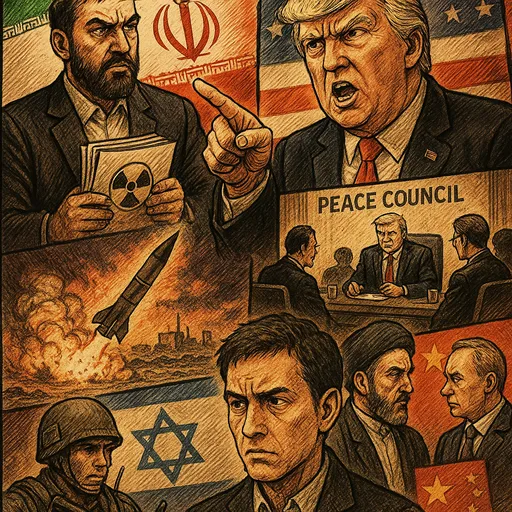
The US and Iran remain locked in complex nuclear negotiations marked by cautious diplomatic progress and escalating military tensions. While Iran prepares counterproposals and drafts for a potential deal, the US, under Trump’s administration, issues ultimatums and considers military options, including limited strikes. Concurrently, Trump has launched a 'Peace Council' focusing on Gaza reconstruction, signaling broader US engagement in Middle Eastern conflicts. Regional actors like Israel express skepticism about any deal lacking strict missile restrictions, while Iran strengthens ties with Russia and consults China, reflecting a multilateral dimension. Analysts warn that despite ongoing talks, the risk of conflict remains high, underscoring the fragile balance between diplomacy and confrontation.
US sources emphasize a dual approach combining diplomatic negotiations with firm military threats to compel Iran into compliance. Trump’s administration sets strict deadlines and warns of severe consequences if no agreement is reached, while also considering limited military strikes. Simultaneously, the US initiates the 'Peace Council' to address broader Middle Eastern conflicts, particularly Gaza, reflecting a strategic blend of diplomacy and pressure.
Iran maintains a firm stance against US pressure, preparing counterproposals and drafts for a nuclear deal while rejecting concessions. Tehran consults with allies like Russia and China, deepening military and nuclear cooperation as a counterbalance to US demands. Iranian leadership publicly resists yielding to US ultimatums, emphasizing sovereignty and readiness to continue diplomatic engagement despite threats.
Regional actors, notably Israel, express skepticism about the viability and security implications of a US-Iran deal, demanding strict missile restrictions. International analysts and diplomats warn that despite ongoing talks, the likelihood of war may surpass that of a peaceful agreement. The fragile situation prompts preparations for potential conflict, highlighting the precariousness of the diplomatic process and regional stability.