

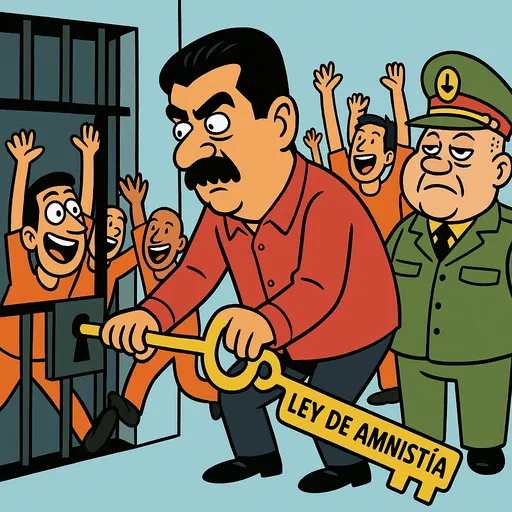
Venezuela has enacted a new amnesty law aimed at releasing hundreds of political prisoners to ease ongoing political tensions and promote national reconciliation. Official reports highlight the release of approximately 379 detainees, with some sources noting initial groups of 80 freed individuals. While the government and supportive institutions, including the Armed Forces, view the law as a decisive and stabilizing measure, critics and opposition groups express skepticism about exclusions and the law's selective application. Discrepancies in reported numbers of released prisoners and concerns from families and human rights organizations underscore ongoing challenges in implementation. The law also appears influenced by international pressure, notably from the United States, and remains a focal point in Venezuela's complex political landscape.
Sources from Venezuela and allied countries emphasize the amnesty law as a significant political development aimed at national reconciliation and easing tensions. They report the release of hundreds of political prisoners, framing the law as a sign of political maturity and strength. The Venezuelan Armed Forces and parliament leaders publicly support the law, viewing it as a crucial step toward stability and peace.
Opposition groups and some international observers criticize the amnesty law for excluding many political prisoners and question the transparency and effectiveness of its implementation. They report fewer releases than official claims and express impatience and skepticism from families of detainees. This viewpoint underscores ongoing political tensions and concerns about the law being a selective act of mercy rather than a broad amnesty.
Some international sources, particularly from the United States, interpret the amnesty law as a response to external diplomatic pressure and part of broader negotiations with Venezuela. They acknowledge the law as a positive but cautious step toward easing political tensions, while recognizing the complex internal challenges and political motives behind the measure.