
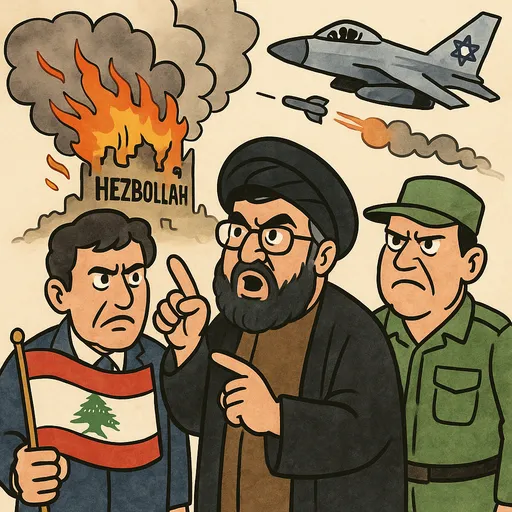
Recent Israeli airstrikes in Lebanon have targeted Hezbollah command centers and positions, resulting in the deaths of at least 8 to 12 individuals, including senior Hezbollah officials. These strikes have significantly escalated tensions along the Israel-Lebanon border, provoking strong condemnations from Lebanon's government, Hezbollah, and regional actors such as Iran and Ansar Allah. Hezbollah has vowed continued resistance and retaliation, while Lebanese officials accuse Israel of undermining diplomatic efforts to stabilize the region. The attacks risk destabilizing the fragile ceasefire and raise fears of a broader conflict in the Middle East. International observers remain concerned about the potential for further escalation and regional instability.
Lebanese authorities and Hezbollah strongly condemn the Israeli strikes as violations of sovereignty and ceasefire agreements, emphasizing the loss of life including senior Hezbollah members. Hezbollah vows to continue resistance and retaliate against further attacks, viewing the strikes as aggressive acts that threaten Lebanon's stability. Lebanese officials highlight the undermining of diplomatic efforts and call for respect of ceasefire agreements to prevent further escalation.
Israeli and Western sources report on the airstrikes as targeted military operations against Hezbollah command centers and operatives, framing the actions as necessary for Israel's self-defense against an Iran-backed militant group. These reports emphasize the strategic intent to disrupt Hezbollah's capabilities and highlight the escalation in hostilities as part of ongoing regional security challenges. The coverage notes the casualties and the heightened tensions but often underscores Israel's security rationale.
Regional actors allied with Lebanon and Hezbollah, such as Iran and Ansar Allah, condemn the Israeli strikes as massacres and violations of international law, blaming ceasefire guarantors for failing to prevent aggression. Their statements reflect broader geopolitical tensions and support for Lebanon against Israeli military actions, framing the conflict within the context of resistance against Israeli and Western influence in the Middle East.