
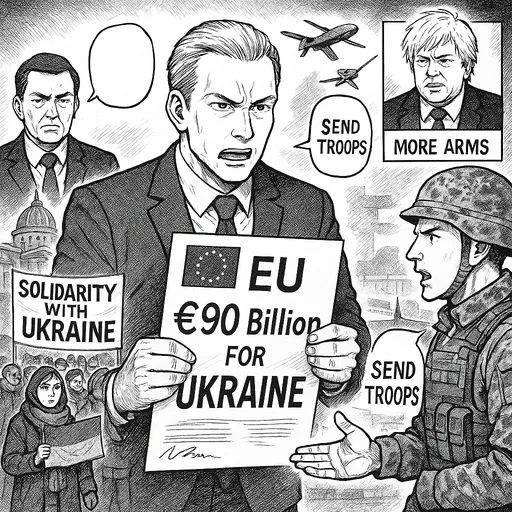
The European Union exhibits a complex and multifaceted response to the Ukraine war, marked by strong financial, military, and diplomatic support alongside internal disagreements. While the European Parliament approved a substantial €90 billion loan package to aid Ukraine, Hungary has blocked this crucial funding due to disputes over energy transit, causing tensions within the EU. Public demonstrations across Europe, especially in Paris, reflect widespread popular solidarity with Ukraine, complemented by increased defense cooperation such as joint drone programs and calls from leaders like Boris Johnson for enhanced military support. Ukraine's leadership continues diplomatic outreach to European allies, seeking both political and military assistance, including appeals for European soldiers to join the fight. Meanwhile, the EU is preparing targeted sanctions against Russia and emphasizing strategic support to counteract Russian aggression and its harsh winter tactics.
Hungary has taken a divergent stance within the EU by blocking the €90 billion loan package intended for Ukraine, linking its opposition to disputes over Russian oil transit and the Druzhba pipeline. This position reflects Hungary's prioritization of national energy concerns over unified EU support for Ukraine, creating significant internal friction and complicating collective European efforts to assist Ukraine financially. The Hungarian government's actions highlight the challenges of maintaining EU cohesion amid differing national interests.
The European Parliament and Commission emphasize robust financial and political backing for Ukraine, approving large-scale loans and urging member states to honor commitments despite internal disagreements. EU leaders, including Ursula von der Leyen, highlight Russia's use of harsh tactics and reaffirm the union's dedication to Ukraine's resilience. Additionally, initiatives such as precise sanctions against Russia and accession negotiations with Ukraine demonstrate a comprehensive approach to support and integration.
Across Europe, public demonstrations in cities like Paris show sustained popular solidarity with Ukraine, marking the war's anniversary with calls for continued aid. Political figures, notably former UK Prime Minister Boris Johnson, advocate for increased military involvement, including sending non-combat and peacekeeping troops to Ukraine. These perspectives underscore a growing urgency among Western allies to bolster Ukraine's defense capabilities and signal commitment to its sovereignty.
European nations are enhancing defense collaboration by developing low-cost anti-drone systems and autonomous drones, leveraging Ukraine's battlefield experience. This joint effort among countries like France, Poland, Germany, the UK, and Italy aims to modernize military capabilities and address emerging threats in the conflict. Such initiatives reflect a strategic shift towards integrated security solutions and deeper military-technical partnerships with Ukraine.
Some voices, including Russian opposition forums and Mediterranean EU states, criticize Western countries for perceived reluctance to fully commit to Ukraine's victory and delay in imposing effective sanctions on Russia. Concerns are raised about the potential counterproductive effects of sanctions and the West's cautious approach, which may undermine efforts to decisively end the conflict. These critiques highlight ongoing debates about the optimal strategy to support Ukraine and pressure Russia.