

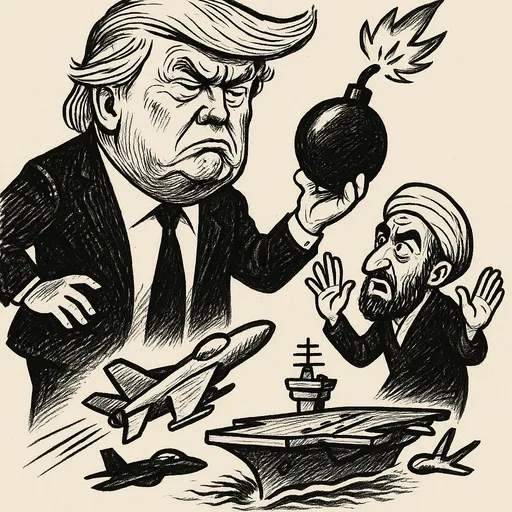
The United States has significantly increased its military presence in the Middle East, including naval and air forces, as preparations for a potential strike on Iran intensify. President Donald Trump is reportedly considering limited or broader military actions to compel Iran on its nuclear program, with decisions expected imminently. This buildup, the largest since the Iraq invasion, involves strategic positioning in locations such as Souda, the Azores, and Jordan, and includes deployment of major aircraft carriers. Diplomatic efforts appear to be faltering as Iran prepares counterproposals, while warnings from Iran and concerns from international observers highlight the risk of a wider regional conflict. The situation remains highly volatile, with political and security implications for the US, Iran, and the broader Middle East region.
Articles from the US, Greece, Indonesia, Kuwait, and Ireland emphasize the extensive US military buildup and strategic deployments in the Middle East and nearby regions. They highlight the readiness for potential strikes, including the positioning of aircraft carriers and targeting plans against Iranian leadership. This viewpoint underscores a hardline stance aimed at pressuring Iran through military strength while acknowledging the risks of escalation.
Articles from the USA, Kuwait, and Azerbaijan focus on Iran's warnings of decisive retaliation and its preparation of counterproposals amid ongoing nuclear negotiations. They reflect the diplomatic stalemate and the fragile nature of talks, with Iran maintaining strategic leverage despite US threats. This perspective stresses the potential consequences of military action and the importance of diplomatic engagement to avoid broader conflict.
Articles from Austria and Argentina discuss the internal US political dynamics, including concerns about the risks of a prolonged conflict with Iran ahead of elections. They highlight the challenges faced by the Trump administration in balancing military escalation with domestic political considerations. This viewpoint reveals the complexity of decision-making amid competing priorities and the potential fallout of military action.