

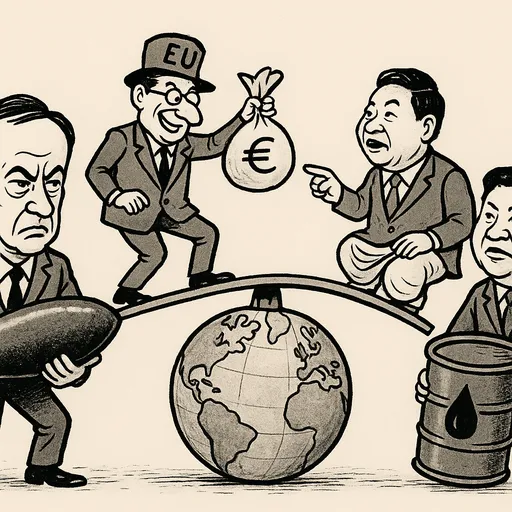
Recent bilateral agreements and engagements show governments prioritizing security cooperation, infrastructure and economic partnerships alongside targeted development assistance. Western allies are deepening defense ties and arms cooperation to bolster deterrence and support partners, while India, Australia and other Indo‑Pacific actors strike energy and strategic deals reflecting shifting regional alignments. China and Russia continue to expand influence through health, infrastructure and investment partnerships, particularly across Africa and the Pacific, prompting competitive responses from other powers. The European Union and individual European states are balancing conditionality on migration and visa access with large-scale aid and enlargement diplomacy to shape neighboring countries’ trajectories. Smaller states and regional neighbours pursue practical pacts on connectivity, policing and trade to boost development and resilience.
Western governments and NATO partners emphasize strengthening deterrence and interoperability through arms purchases, missile production and bilateral defense pacts. These initiatives are framed as responses to regional threats and as efforts to modernize allied capabilities while deepening industrial cooperation.
India and regional partners are expanding strategic ties focused on energy security and defence cooperation to address Indo‑Pacific anxieties and diversify supply chains. High‑level visits and pacts underscore a push for closer practical collaboration across uranium, defence and broader strategic domains.
China projects influence through targeted health, infrastructure and transport support, portraying its role as a development partner delivering tangible aid and connectivity projects. Beijing’s partnerships in Africa, Central Asia and the Pacific are presented as long‑term commitments to deepen economic and diplomatic ties.
Russia is expanding its footprint via diplomatic openings, economic deals and security alignments, particularly across Africa and the Sahel, signalling intent to deepen bilateral ties and political influence. Moscow frames these moves as mutually beneficial partnerships and a latitude‑expanding foreign policy.
The EU and leading European institutions balance enlargement and aid with policy conditionality, using instruments like visa facilitation and major assistance packages to incentivize cooperation and reforms. Brussels’ posture mixes support (large aid envelopes) with leverage (temporary visa or facilitation measures) to shape partners’ behaviour.
Pacific states are the focus of competing offers and security arrangements from Australia, China, the US and others; regional players sign defence pacts, development agreements and capacity‑building programmes to secure investment and safeguard sovereignty. Local governments emphasise partnerships that support infrastructure, policing and economic resilience.
Bilateral deals increasingly prioritise transport links and commercial connectivity—restoring air routes, launching carriers, and expanding regional market access—to stimulate trade and tourism. Governments and private partners present aviation and logistics agreements as catalysts for economic recovery and greater people‑to‑people ties.
Across Africa, states pursue rapprochements and diversified partnerships—reopening embassies, restarting airspace and courting foreign investors—to stabilize relations and attract capital. Several governments are simultaneously engaging European, Middle Eastern and Asian partners to rebuild ties and support development projects.
States and regional blocs use visa rules, repatriation cooperation and consular arrangements as leverage to influence migration flows and partner behaviour. These measures are framed as enforcement and bargaining tools to secure readmission agreements and improve border management.
Bilateral and multilateral programmes focus on strengthening policing, defence training and law enforcement cooperation to enhance regional stability and interoperability. Partnerships underscore practical assistance—training cohorts, police exchanges and joint exercises—as long‑term investments in security architecture.
Governments and financial institutions seal guarantees, acquisition financing and investment drives to mobilize capital for infrastructure, banking and sectoral expansion. These bilateral financial arrangements are presented as catalytic tools to attract private investment and accelerate development projects.
Central Asian states pursue cooperation with major partners on law enforcement, infrastructure and human capital to modernize institutions and diversify external relations. Engagements with the US, Russia and neighbours emphasize training, customs links and broader sectoral collaboration.
Gulf and Middle Eastern diplomacy features moves to recalibrate security stances and normalize ties, often with external support or pressure shaping member states’ responses. Announcements and bilateral frameworks reflect shifting alliances and pragmatic cooperation on shared challenges.
Countries are forging targeted scientific, intellectual property and technological partnerships to spur innovation, protect assets and deepen research links. These deals often pair national institutes or funders with foreign counterparts to build capacity and commercialize research.
Many agreements take the form of memoranda, accreditation ceremonies or reciprocal visits emphasizing continuity and goodwill in bilateral ties. These low‑risk, high‑visibility interactions maintain channels for future cooperation and signal diplomatic intent.