
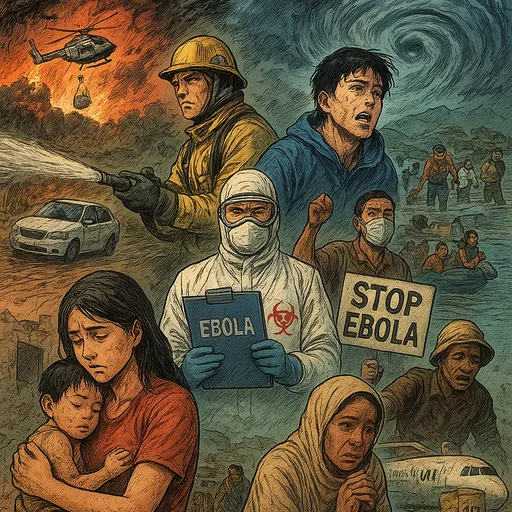
Reports this cycle center on a deadly wildfire in southern Spain that has killed at least a dozen people, trapped motorists and forced mass evacuations, drawing widespread international attention and cross-border firefighting support. In East Asia and the Pacific, Typhoon Bavi killed scores in the Philippines and prompted large evacuations and emergency declarations across Taiwan, Guam and neighbouring territories. A fast‑moving Ebola outbreak in the Democratic Republic of the Congo has pushed fatalities into the hundreds and strained response capacity, with health workers even staging protests that threaten containment efforts. Major humanitarian crises in Venezuela and Sudan — from a devastating earthquake with thousands killed to drought- and cholera-related alerts and hazardous mine collapses — have prompted UN appeals and international aid shipments. Throughout these stories, reporters emphasize both the acute rescue and relief operations on the ground and the wider challenges that conflict, infrastructure failures and extreme weather pose to timely humanitarian response.
International outlets report a fast‑moving, deadly wildfire in Andalusia that killed a dozen people, left many missing and forced large evacuations. Coverage emphasizes trapped motorists, foreign victims, stretched firefighting resources and the heatwave conditions that worsened fire behaviour.
Regional and international reports focus on Typhoon Bavi’s deadly impacts and the large-scale preparedness measures it triggered, including evacuations, school and office closures and public health emergency declarations. Coverage highlights cross-border coordination for search, rescue and medical support across the Philippines, Taiwan, Guam, the CNMI and nearby countries.
Health and international outlets emphasize a rapidly escalating Ebola outbreak in the DRC with death tolls rising into the hundreds and case counts climbing, describing it as one of the fastest‑spreading episodes. Reporting notes response challenges — including strikes by some health workers, community rumors and the strain on vaccination and surveillance campaigns — and calls for sustained international support.
Coverage from regional and international sources highlights the massive human toll of a recent Venezuelan earthquake and the ensuing appeal for large‑scale humanitarian funding and reconstruction aid. Reports emphasize UN appeals, bilateral offers of assistance, emergency supply shipments and government plans to contract foreign firms for rebuilding housing.
African and international reports stress urgent humanitarian risks in Sudan and South Sudan, from UN preparedness for an imminent drought to cholera outbreak alerts affecting war‑weary communities. Coverage also highlights the difficulties of returns to underprepared capitals and lethal accidents such as artisanal mine collapses that compound relief needs.
Reports underscore growing dangers to humanitarian personnel and campaigns in conflict-affected areas, documenting attacks on polio vaccination teams, a drone strike on an NGO ambulance in Ukraine and militant obstruction of cholera response in Nigeria. Sources frame these incidents as direct threats to vaccination drives, evacuations and the safe delivery of aid.
A diverse set of outlets cover sudden disasters — including aviation crashes in the Bahamas and Pakistan, deadly factory fires and dam breaks in China, earthquakes, large rescue operations and major infrastructure failures — focusing on search and rescue, casualty counts and subsequent safety or regulatory probes. The reporting highlights how varied emergencies demand coordinated rescue, medical response and investigations into causes and preparedness gaps.