
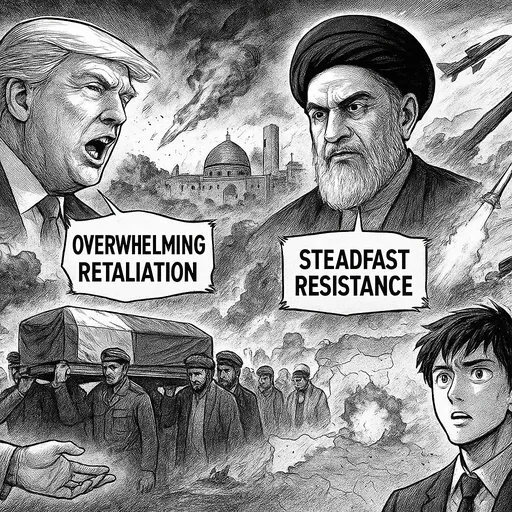
A sharp cycle of US strikes and Iranian counterattacks has unfolded across the Gulf, accompanied by repeated public threats from US President Donald Trump promising overwhelming retaliation if he is targeted. Tehran has vowed steadfast resistance, reported casualties from strikes, and signalled both kinetic and symbolic responses as leaders and funerals punctuate the crisis. Gulf states and regional partners are struggling to contain spillover: several countries report missile interceptions and condemn attacks that threaten airspace and shipping. Simultaneously, violence continues on the Levant front—Israeli strikes in Lebanon and Gaza underscore the risk of multiple, simultaneous conflagrations. International commentators highlight uncertainty over attribution for several strikes and warn the confrontation could further destabilize energy routes and regional security if it broadens.
Reports in this group focus on US leadership rhetoric and military action, framing Washington as the active responder and deterrent against Iranian threats. Coverage emphasizes Trump's promises of overwhelming retaliation and official CENTCOM statements about strikes intended to degrade Iran's capabilities.
These pieces present Tehran's perspective of defiance, portraying Iranian leaders as vowing resistance, condemning US strikes, and describing retaliatory actions against US interests and regional partners. Coverage highlights Iranian reports of casualties, statements from officials about all‑out defense, and activity interpreted as bolstering deterrent capabilities.
Gulf and regional governments stress protecting airspace, shipping and sovereignty while condemning attacks attributed to Iran and calling for de‑escalation. Reports from the region emphasize missile interceptions, diplomatic rebukes, and coordinated security measures to limit spillover.
Coverage here centers on frontline violence in Gaza, Lebanon and southern Syria, documenting Israeli strikes, militant activity and civilian harm while some Palestinian outlets critique Israeli and allied intelligence and decision‑making. The reporting highlights how localized Israeli–Palestinian and Israel–Lebanon clashes are continuing alongside the wider Iran–US confrontation.
These items adopt a more neutral, analytical stance, emphasizing uncertainty about who carried out certain strikes, the fragility of shipping through the Strait of Hormuz, and advisories for residents and mariners. Analysts and international outlets warn that ambiguous attribution and attacks on tankers risk rapid escalation and global economic disruption.
This group highlights how other theatres and armed groups—ISIS remnants, Yemeni actors, and Iraqi resistance formations—remain active and may influence or exploit broader instability. Reports stress ongoing counterterrorism finds, Yemeni‑linked warning incidents, and militia statements about expanding capabilities amid the wider confrontation.