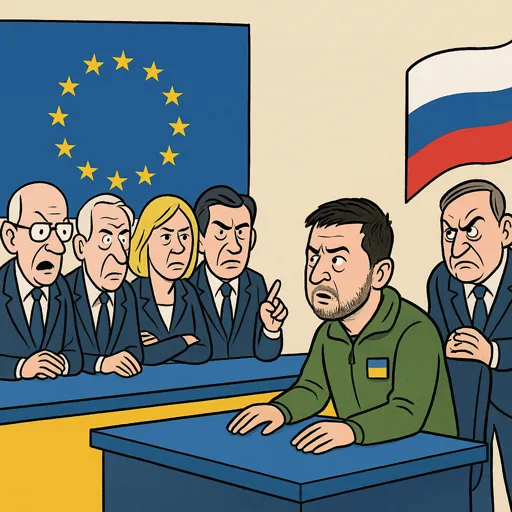
The European Union has moved to secure a direct role at Ukraine peace negotiations by assembling a joint team made up of EU institutions and a five-nation group, signaling active EU mediation. Member states have confirmed representatives and a negotiating lineup, but the choice of format and envoys has exposed divisions within the bloc. European leaders stress the need for clear security guarantees and caution — some insist on prerequisites like a ceasefire and limits on what topics are negotiable. Moscow’s reticence and competing narratives from Russian outlets underscore the fragility of any deal and the diplomatic hurdles ahead.
EU institutions together with a five-nation grouping (the E5) have been designated to speak for Europe in Ukraine peace talks, with confirmations and leadership statements framing this as a coordinated European approach. Several reports detail who will sit at the table and portray the move as an effort to streamline Europe’s diplomacy and present a single interlocutor in talks with Kyiv and Moscow. Officials present the arrangement as necessary to influence outcomes and uphold European interests in any settlement.
Member states remain split on whether to appoint a single envoy or a team and on the scope and authority of any European representative, with France, Germany and some Baltic states openly opposing particular proposals. Kyiv has pushed for a European envoy while other partners warn that US positions and broader geopolitical considerations complicate consensus. Observers note the lack of a fully unified European voice could limit the bloc’s leverage in talks.
European leaders emphasize the need for strong security guarantees, a clear and united European voice, and in some cases a ceasefire as preconditions for meaningful talks, reflecting caution about Moscow’s intentions. Prominent leaders have warned against falling into potential Russian traps and argued certain topics — like European security architecture — should be kept out of immediate negotiations. New trilateral and multilateral formats are being discussed as ways to advance diplomacy while safeguarding core principles.
Russian outlets and statements make clear Moscow has not agreed to every proposed topic or format, and Russian reporting highlights competing European initiatives and coalitions ready to engage in talks. Coverage from Russian sources also notes specific national roles and proposals, signaling both interest and reservation on Moscow’s part. That ambiguity from Moscow increases uncertainty about whether and how a negotiated settlement can proceed.