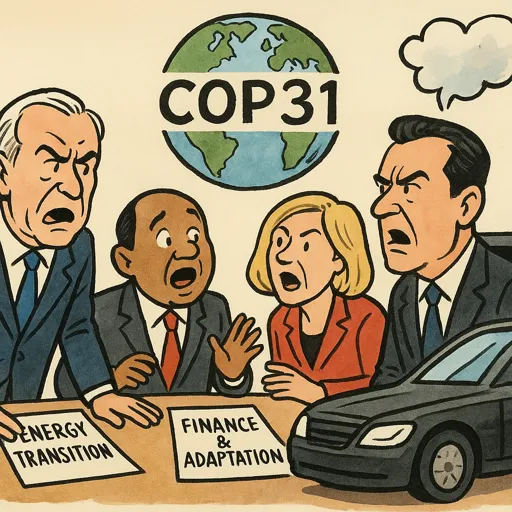
At COP31 in Antalya negotiators struggled to reconcile geopolitical positioning with urgent climate action, as energy transition debates collided with demands for finance and adaptation. High-profile optics and diplomatic manoeuvres—ranging from luxury transport critiques to hot-mic incidents—shaped public perceptions even as talks advanced. Smaller and vulnerable states pressed for simpler, faster finance and stronger regional agendas while larger powers jockeyed over leadership on renewables and fossil-fuel phase-downs. Procedural and scientific disputes risked slowing consensus even as countries announced partnerships and national plans to mobilize investment and resilience.
COP31 served as a stage for diplomatic positioning and public scrutiny, where optics—from luxury transport to hot-mic moments—shaped perceptions of climate leadership. Türkiye pushed its presidential role while leaders used the summit to advance national priorities amid competing international agendas.
Debates on the pace and direction of the energy transition highlighted competing visions of leadership, with Germany and China cast as major drivers and the US influencing practical support. Negotiations mixed big-power strategic signaling with technical work on fuel security, renewables deployment and the economic costs of climate impacts like El Niño.
Developing countries and COP hosts emphasised concrete finance and investment packages, framing climate action as central to development and resilience. Ethiopia and Rwanda engaged multilateral partners and presented multi-billion dollar plans while Sahel and Pacific voices pressed for accessible, rapid funding.
Regional initiatives struggled for formal traction as Himalayan nations failed to secure a separate negotiating track and Pacific islanders amplified stories of displacement and vulnerability. Regional partners including New Zealand remained engaged, but limited bloc support left many small-state priorities underrepresented in plenary negotiations.
Technical debates over climate science and modelling produced sharp disagreements that complicated negotiating pathways, even as oceans were asserted as a central priority requiring binding targets and funding. Observers warned that procedural and scientific fights could delay implementation-oriented outcomes needed by vulnerable states.