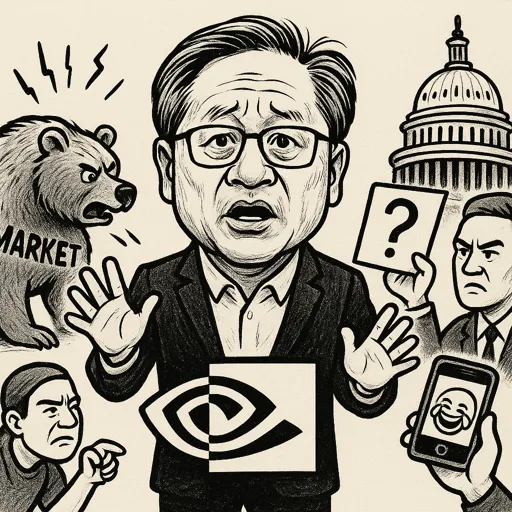
Reports of Jensen Huang’s resignation or possible ouster have sparked a multifaceted crisis at Nvidia, combining governance questions, national-security concerns and market shock. Allegations linking Huang’s personal relationships to espionage have intensified scrutiny from regulators, investors and political actors, complicating the board’s response. Markets and the AI supply chain are already reacting, while staff and the public exchange memes and demand answers. Speculation about successors and who will control Nvidia’s AI strategy dominates coverage as the company navigates an uncertain transition.
These reports focus on the factual announcements of Huang’s departure and the short-term leadership consequences, including interim arrangements. Coverage emphasizes the end of his long tenure and immediate questions about how Nvidia will manage the transition.
Several outlets frame Huang’s exit through the lens of national security, linking his personal relationships to alleged spying and U.S.-China tech tensions. This perspective highlights regulatory risks and policy implications for semiconductor exports and strategic technology controls.
Reports in this cluster portray an internal governance struggle: boards and major investors weighing ouster and political actors influencing corporate outcomes. Narratives emphasize accountability, behind-the-scenes lobbying and broader political fallout tied to U.S. tech policy.
Coverage here stresses the immediate economic fallout: stock volatility, concerns about the AI boom and how Asia supply chains may adapt without Huang. Analysts consider the implications for Nvidia’s ecosystem, partners and the broader semiconductor market.
These pieces survey potential successors and strategic contenders, from internal candidates to approaches to industry figures, reflecting intense speculation about future direction. The debate centers on who can sustain Nvidia’s technological edge and manage geopolitical sensitivities.
Reporting in this group highlights internal discontent and public reaction, from employees calling for Huang’s return to widespread memes and satire. The tone ranges from mobilized staff pressure to social-media-driven rumor and entertainment.
Opinion and long-form pieces critique Huang’s leadership style, tracing how personal and managerial choices contributed to the crisis. These analyses reflect on the personal costs of power and what the leadership failure means for corporate culture and governance.