

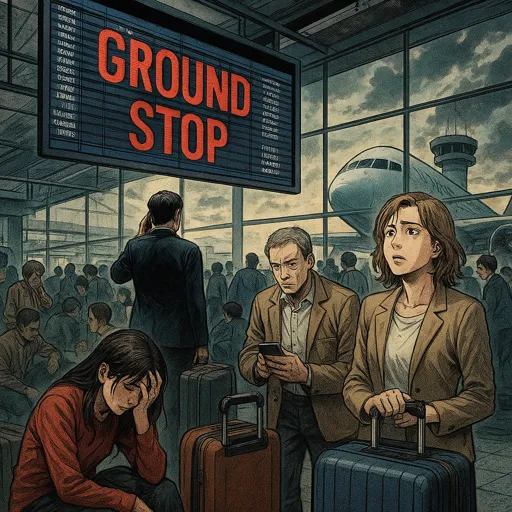
A rare, nationwide FAA ground stop halted U.S. flight departures after a widespread air‑traffic communications failure and reports of aging infrastructure. The pause produced thousands of delays and cancellations and left many passengers stranded, while officials repeatedly described the action as a safety precaution and denied any terrorist or cyberattack. Flights were allowed to resume gradually as systems were restored, but regulators and safety agencies continue investigating software, hardware and operational causes. The episode highlighted international ripple effects, renewed calls for modernization of air‑traffic systems, and the need for stronger contingency planning.
Multiple outlets attribute the grounding to outages, telecommunications failures or faults in aging air‑traffic control hardware and software, framing the stoppage as a technical incident rather than a security breach. Reporting stresses system fragility and the role of legacy equipment and network problems in forcing a nationwide halt and complex recovery efforts.
 FAA cancels nationwide flight suspension
 More than 10,000 delays and 1,700 cancellations in the US due to takeoff suspensions
 Flights resumed calmly in the United States after a four-hour outage
 United States reopens its airspace after massive outage that left more than 5,100 flights canceled and 9,800 delayed
 United States: all flights grounded nationwide due to a massive outage
 All flights halted in the United States
FAA orders departure suspensions at US airports due to communications problems
 United States resumes flights after outage that paralyzed airports and caused nearly 6,000 cancellations
 U.S. grounds all departing flights due to traffic control communication issues
 Air traffic across the United States grounded after major air-traffic control outage
 U.S. suspends all aircraft takeoffs due to a communications failure
 All air travel halted in the United States
 Major alert in US aviation: all flights halted in the United States after an air traffic control communications issue
 Overview of U.S. air travel outage: Flights resume after nationwide grounding.
 Emergency Situation in the USA: FAA Grounds Flights Nationwide
 Air travel halted in the United States after 17 years: what caused such a big disruption?
 US flights grounded nationwide after air traffic control outage: What to know
 US Transportation Secretary: Communications issue affects all air traffic control centers nationwide
United States halts flights nationwide due to air traffic control failure
Major outage in the USA. Air traffic nationwide suspended indefinitely
Flight stoppage has been lifted – old hardware blamed
 Nationwide U.S. Flight Grounding Lasts 4 Hours, 20 Minutes After Failure
 US Ground Stop Briefly Disrupts Airports, Only the Second Since 9/11
 Flights halted at airports across US due to air traffic control communications problems, FAA says
A failure in an old communications system forced takeoffs to be suspended for almost four hours
 US FAA orders unusual nationwide flight stoppage due to air traffic control outage
The flight stoppage has been lifted – old hardware pointed to
 US: FAA halted takeoffs of all aircraft after a failure in communications systems
US ground stop delays flights from Incheon Airport
 U.S. FAA halts takeoffs at all U.S. airports due to nationwide air-traffic-control communications outage
 Telecommunications problem triggers over 10,000 delays and 1,700 cancellations in US flights
 United States orders suspension of takeoffs nationwide due to communications problems
USA: The FAA orders a nationwide halt of all flights
 Two and a half hours of flight suspensions in the US; more than 10,000 delays and 1,700 cancellations reported
 Order to cancel all flights across the United States due to a communications issue
Authorities framed the grounding as an extraordinary safety or security precaution while repeatedly denying that the outage reflected a terrorist or confirmed cyberattack. Homeland Security and transportation officials emphasized reassurance, warned the public against alarmist comparisons to past attacks, and described ongoing threat assessments as flights were suspended.
 All flights grounded; officials deny malicious attack against the USA
 FAA orders nationwide grounding of all aircraft takeoffs
 U.S. says suspension of flight takeoffs is not due to a terrorist attack
 The FAA orders all aircraft to remain grounded.
 FAA orders nationwide ground stop for all flights
 Terrorist Attack? US Flight Shutdown Triggers 9/11 Fear; Homeland Security Boss Reveals... | Watch
 All flights suspended in the United States
US says flight suspension is not related to any attack
 Alarm in America: U.S. official warns flights won't normalize soon: 'This is not a new 9/11'
 All flights grounded in the United States for security reasons and extraordinary circumstances.
 US aviation authorities issue nationwide flight ban
The order to suspend takeoffs is not in response to any terrorist attack
 Flight shutdown in the United States... Aviation Administration imposes a nationwide takeoff halt
U.S. rules out terrorist attack after nationwide flight suspension
 US temporarily bans flights from all airports on FAA order
 US suspends all flights nationwide for security reasons
US rules out terrorist attack after nationwide flight suspension
US says that takeoff suspension was not due to a terrorist attack
 All US flights grounded amid cyberattack speculation: What we know so far
Authorities rule out signs of a cyberattack
U.S. authorities institute immediate nationwide flight ban
 Security reasons: Nationwide flight stoppage ordered across the United States
 All US flights grounded by authorities for 'reasons of safety'
US grounds all flights, sparking travel chaos
 U.S. FAA grounds all departing flights due to extraordinary circumstance, safety reasons
 Air traffic alert in the United States: emergency conditions ground all flights
 ‘This Is Not Another 9/11’: US Says Flight Suspensions Were Not Due to a Terrorist Attack
 The FAA orders suspension of air traffic at all U.S. airports for safety reasons
All flights grounded in the United States for security reasons: what is known
 US Homeland Security Secy rules out threat behind nationwide ground stop
Coverage focuses on the immediate human and logistical toll: thousands of delays and cancellations, crowded terminals, stranded travelers and cascading schedule chaos across major hubs. Eyewitness accounts, photo essays and service reports document long waits, missed connections and the airport‑level scramble to rebook and care for affected passengers.
 Updated Airports ‘Overloaded’: US flight grounding leaves days of travel chaos in its wake
The United States Orders Closure of All Airports for Air-Safety Reasons, Flights Canceled for Just Over Four Hours
 Emergency situation in the United States: nationwide grounding of aircraft, thousands of flights delayed
 US travel ban: This is what is known at 7 o'clock
DN answers four questions about the flight stoppage in the USA
 Air traffic grounded: nationwide flight bans across the United States; tanker collision near New Orleans; Coast Guard joins rescue efforts
United States resumes flights after communications failure; Copa Airlines offers passenger facilities
 ‘I may lose my mind’: Frustrated travellers stuck in ground stop of US flights
The pilot was the one who told us, and we were already moving; Ana Paula Ordorica recounts the air pause in the US from Washington, DC
 US grounds all flights for hours, sparking travel chaos
 Four hours of standstill: A nationwide flight stoppage plunges the USA into chaos
Chaos in the U.S.: All flights grounded due to emergency circumstances
US lifts nationwide ground stop on flights caused by communications failure
United States suspends flights for security reasons: at least 5,800 flights canceled between Friday and Saturday
 All air traffic stopped in the United States
US air traffic halted for hours: This is what is known now
 US flight disruption persists after nationwide ground stop ends
Joel missed his funeral – flight stoppage gave Bobby a major opportunity
"I'm going to go crazy"; flight suspensions in the EU cause chaos among passengers
In pictures - This is how American airports looked after the nationwide takeoff ban
 Passengers in uncertainty after large flight stoppage in the US: 'I'm stuck here'
 What’s happening? Crowded airports and no terror attack: why did the US suspend flights?
Flight suspensions in the US caused chaos; air services resumed
U.S. flight suspension causes more than 10,000 delays and 1,700 cancellations
 US halts thousands of flights due to communication problems
 Chaos in the United States after a suspension of all flights for several hours
 Planes grounded in the United States
Live: All flights in the U.S. suspended; the ban will last for hours. U.S. Secretary: 'This is not the new 9/11'
United States orders nationwide grounding of takeoffs for 'security reasons': about 10,000 delays.
Reports track the lifting of the nationwide ground stop, a phased return to operations and active probes into root causes — from telecom outages and old hardware to questions about recent software or AI tool changes. Officials and agencies, including the FAA and law‑enforcement partners, pledged reviews and promised updates while airlines worked to clear backlogs and restore schedules.
FAA speaks: Cause of the complete air traffic halt in the United States identified
FAA ends nationwide ground stop as Trump officials blame old infrastructure on outage
 United States lifts the suspension of flights within the United States
 Live USA: US aviation authority lifts nationwide flight ban
Ingmar Nevéus: The stoppage shows how vulnerable air travel is
 US announces end of flight suspensions
US Lifts Flight Ground Stop, Not Linked to Cyber Attacks or Microsoft Outage
 US flight departures resume after FAA lifts nationwide ground stop
Live Aviation US flights grounded LIVE updates: Departures to resume as FAA lifts ground directive after citing ‘extraordinary circumstances’; Homeland Security secretary denies cyberattack, Microsoft outage connection
US lifts takeoff suspension at airports, but delays persist
US lifts takeoff ban after more than four hours of air travel disruption
United States resumes flight takeoffs after hours of disruption.
 United States: FAA ends flight suspension after more than four hours of disruption
FAA investigating a communications failure that disrupted U.S. air operations after expanding its AI tool usage
No more wait: United States lifts takeoff suspension that paralyzed flights at airports
US says airspace now ‘opened up’ after grounding all flights for hours, sparking travel chaos
US airspace reopens after 4.5 hours
US resumes takeoffs after hours of disruption and thousands of flights affected
The FAA lifts flight suspension across the United States after several hours of telecommunications outage
Circumstances Extraordinary: U.S. closes airspace and suspends flights
U.S. lifts flight suspension after hours of air chaos
 US says airspace now ‘opened up,’ no cyberattack
09:15 Israeli Flights Blocked From Landing; Chaos In US; FAA Lifts Nationwide Ground Stop After 4 Hours
The U.S. grounding had knock‑on consequences worldwide: neighboring Canada and trans‑Atlantic services faced cancellations or delays, and foreign carriers adjusted or delayed routes to the U.S. Regulators and airlines abroad monitored developments and offered passenger assistance as schedules and international connections were disrupted.
Air traffic disruption: Restrictions also imposed in Europe due to US flight stoppages
The suspension of takeoffs in the United States causes dozens of cancellations in Canada
Canada Most Affected by US Flight Suspension
Air New Zealand delays flights to US following ground stop
 UPDATE US grounds departures: Are UAE flights affected?
