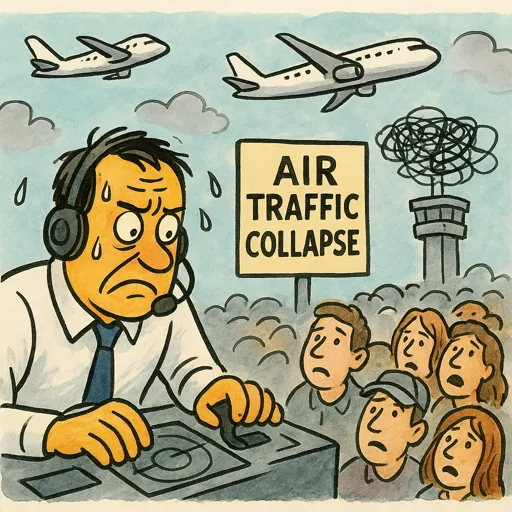
A nationwide air-traffic collapse in the United States caused thousands of cancellations and delays and left millions of travelers stranded, exposing vulnerabilities in the country’s heavily trafficked airspace. Investigations and reporting have pointed to aging, overloaded communications equipment and integration problems with new technology rather than terrorism or a cyberattack. Senior officials and lawmakers have proposed large modernization packages—ranging from about $30.1 billion to $50 billion—to upgrade infrastructure and improve resilience. Flights have gradually resumed, but the episode has intensified debate over funding, system upgrades, and operational coordination to prevent future nationwide disruptions.
Authorities and government sources attribute the outage to obsolete or overloaded air-traffic communications equipment and problems during integration of new technology. Administration and transportation leaders are pressing Congress for substantial modernization funding (proposals cited around $30.1 billion to $50 billion) to prevent repeat failures. Investigations continue into the exact failure modes while policy debate focuses on investment and upgrade timelines.
The disruption produced widespread operational chaos: thousands of cancellations and delays, major hubs overwhelmed, and roughly 1.5 million travelers stranded overnight. Airlines scrambled to rebook passengers and manage backlogs while airports coped with long waits and uncertain boarding times. Reporting underscored the human and operational toll and the need for better contingency planning and recovery procedures.
The United States operates the world’s busiest airspace, making it both an economic asset and operationally complex, so single failures can have nationwide ripple effects. Officials emphasized the outage was not caused by terrorism or a cyberattack and noted that takeoffs eventually resumed, highlighting the fragility of the network and the importance of coordination among agencies and carriers.