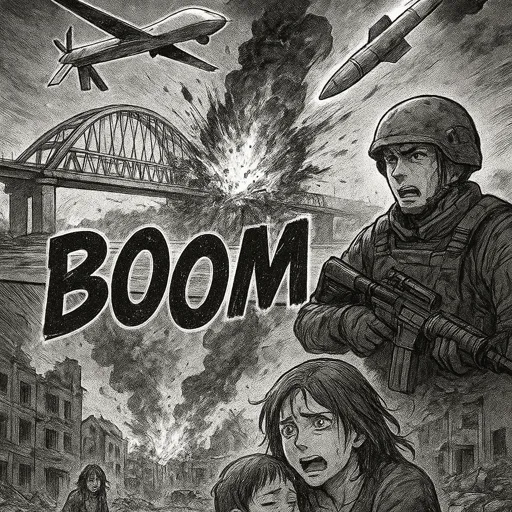
Heavy Russian missile and drone strikes continue to hit Ukrainian cities and critical infrastructure, inflicting civilian casualties and widespread damage. Kyiv has responded with cross-border drone and maritime strikes targeting Russian facilities and shipping in the Baltic and northwestern Russia, raising regional tensions. The destruction of the Crimea (Kerch) Bridge and related operations have become a focal point, prompting firm rhetoric from both Kyiv and Moscow and analysis of strategic implications. Incidents spilling into neighbouring airspace and reported impacts in Poland, Finland and Moldova have heightened the risk of broader escalation while domestic Russian recruitment and foreign casualty reports underline the wider human cost.
Russian offensives continue to focus on large-scale missile and drone barrages that damage bridges, energy networks and residential areas, producing civilian deaths and humanitarian strain. Ukrainian leaders and international observers condemn the attacks and call for accountability as the winter and infrastructure vulnerabilities sharpen the crisis.
Ukraine is increasingly striking targets inside Russian territory and at sea, with reported drone attacks on cargo and naval vessels and strikes near Kaliningrad and Leningrad Oblast. Finland and Baltic states are closely monitoring incidents in their waters and airspace, with many details still unverified and attribution contested.
Kyiv frames attacks on the Crimea (Kerch) Bridge as a legitimate response aimed at disrupting Russian logistics, while analysts describe a deliberate campaign to exploit Russian vulnerabilities. Moscow vows painful reprisals and demands concessions, illustrating how the bridge has become both a tactical objective and a political flashpoint.
Missiles and drones have crossed into neighbouring airspace, with reports of strikes and violations affecting Poland, Moldova and Finland and prompting investigations and diplomatic concern. Such spillover incidents raise the risk of unintended escalation and force NATO and regional partners to reassess air and border security measures.
Leaders on both sides are using stark rhetoric — from Zelensky’s denunciations of Putin to Putin’s calls for painful responses and offers of compromise — framing the conflict’s moral and political stakes. At home, Russia faces recruitment drives and social consequences, and foreign nationals killed in the fighting underscore the personal toll beyond immediate frontlines.