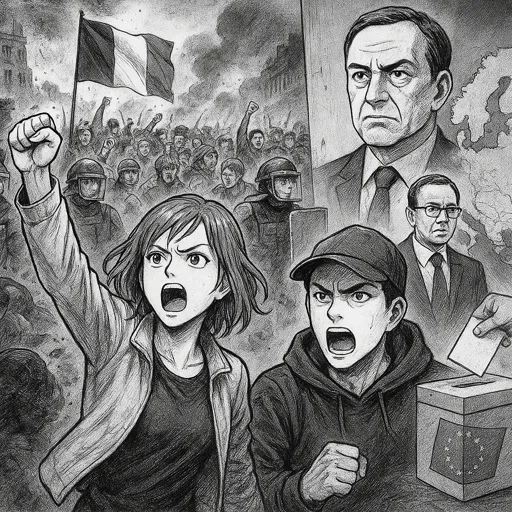
France is experiencing sustained social unrest marked by six consecutive weekends of protests against the high cost of living, wage disputes, and public service concerns, leading to clashes, arrests, and intensified scrutiny of police conduct. Politically, the presidential race shifts with candidate withdrawals and new entries, amidst internal debates on EU funding and Ukraine support. On the international front, France engages in strategic energy imports, bilateral cooperation on drug trafficking, cultural restitution demands, and diplomatic efforts related to the Ukraine conflict and regional security.
France is facing continued social upheaval due to economic grievances, with widespread protests over living costs, public services, and wages persisting for six consecutive weekends (Articles 5,7,14,16,17,18,19,20,21,26,27,30,33,34,36,38). These demonstrations have often led to confrontations with security forces, resulting in arrests and raising serious concerns over police violence and racism, as highlighted by multiple investigations into law enforcement abuses (Articles 2,3,10,25,35,37,40). The domestic turmoil reflects deep societal divisions and pressures on governance and civil liberties in France.
The political scene in France is evolving with noteworthy developments in the presidential race, including the withdrawal of candidate Rufen and the announcement of former Prime Minister Dominique de Villepin's candidacy (Articles 9,31,32). Concurrently, debates on European Union budget proposals and Ukraine funding reveal internal divisions and strategic recalculations, especially within France's right-wing factions ahead of upcoming elections (Articles 15,28). These political dynamics intertwine domestic challenges with broader European policy considerations.
France continues to engage actively on multiple international fronts, enhancing energy cooperation with Kazakhstan through increased oil imports (Article 1), enforcing new drug trafficking agreements with Saint Lucia (Article 8), and addressing calls from Benin for the restitution of colonial-era cultural artifacts (Article 29). Moreover, France participates in significant geopolitical and security efforts, including coalition pledges supporting Ukraine (Article 4), dialogues involving Russia after summits aimed at conflict resolution (Article 6), and military presence in the Mozambique Channel against Russian influence (Article 23). France also commemorates international humanitarian concerns, as seen in memorials acknowledging Palestinian suffering (Article 22).
High-profile legal cases involving celebrity figures have attracted public and judicial attention in France, notably accusations of sexual assault against actor Gérard Depardieu and writer Michel Houellebecq (Articles 24,39). Additionally, legal actions targeting Gabonese activists within France highlight the complexities of political dissent and transnational legal disputes (Article 11). These controversies contribute to ongoing debates about justice, accountability, and the influence of prominent individuals within French society.
Incidents involving foreign nationals near French territories have prompted investigations and raised security concerns. A notable case involves a Russian detained in connection with the death of a wealthy Georgian near Monaco, with authorities conducting autopsy and inquiries (Article 13). These events underscore France's role in regional security oversight and the challenges posed by cross-border criminal and investigative matters.