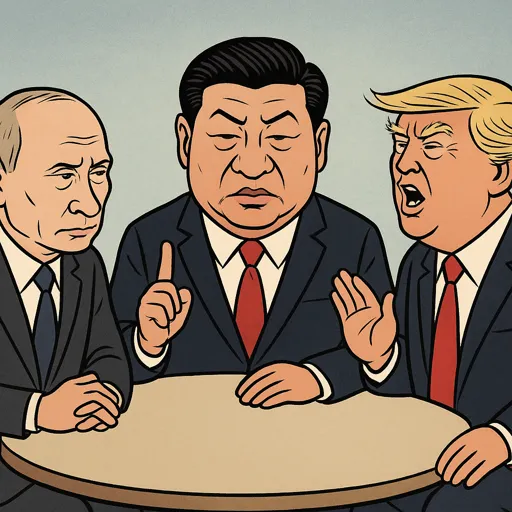
Xi Jinping, Vladimir Putin and Donald Trump met in Shenzhen for an unprecedented trilateral summit, issuing a joint peace declaration and emphasising dialogue on strategic risks such as nuclear arms, regional conflicts and technological competition. The encounter was heavy on symbolism and carefully staged optics, while concrete policy breakthroughs were limited or unspecified. Xi appeared to seize a commanding narrative role, Putin used the format to raise Russia’s profile, and Trump’s personal diplomacy and remarks (including calling Putin a 'friend') provoked controversy. Observers say the summit signals intensified great‑power diplomacy, but its long‑term impact depends on follow‑through and verifiable agreements.
The leaders presented the Shenzhen meeting as historic, issuing a joint peace declaration and stressing the value of continued trilateral dialogue. Reporting highlights broad agreement on the need for cooperation on global stability, but notes that details and implementation remain vague.
Much of the summit’s effect came from choreography and optics — from tarmac greetings to memorable gestures and staged moments. Commentators argue the encounter likely functioned more as a signaling exercise than as a source of immediate policy change.
Xi Jinping appeared to use the summit to bolster China’s leadership narrative and portray a vision of a new world order with Beijing at the centre. Analysts say Trump and Putin’s participation gave Xi a powerful image to promote internationally.
Vladimir Putin leveraged the trilateral format to enhance Russia’s visibility and influence, signalling Moscow’s desire to keep high‑level channels open. Some analyses contend the meeting did not entirely go Putin’s way and that Russia’s diplomatic gains will depend on subsequent action.
Trump’s personal approach dominated coverage, with critics spotlighting his rhetoric and his reference to Putin as a 'friend', which drew domestic pushback. Several pieces stress that bold optics and rhetoric alone will not bridge divergent U.S., Chinese and Russian interests.
The summit addressed high‑stakes issues including nuclear arms reduction, Ukraine and the situation in Iran, reflecting an appetite to discuss strategic stability. Reports underline the difficulty of achieving concrete, aligned commitments given differing national priorities.
Commentators offered mixed readings — from cautious optimism about new channels of communication to scepticism about the summit’s substantive impact. Key takeaways emphasise areas of convergence, remaining disagreements and the central importance of follow‑through for any lasting shift in the world order.