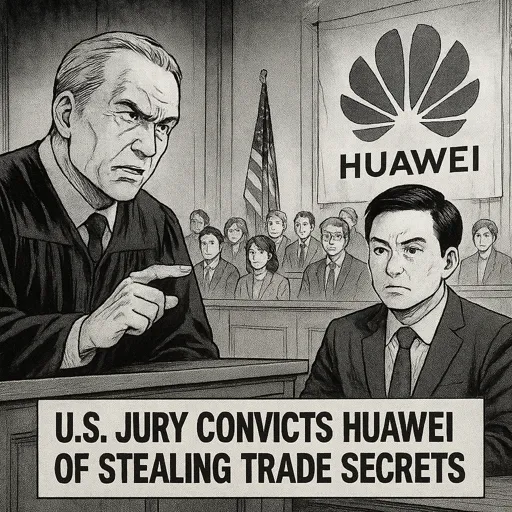
A U.S. jury convicted Huawei of stealing trade secrets and related offenses, with several reports also noting findings of bank fraud and deception tied to its Iran business. The verdict underscores mounting U.S.–China tensions over technology, intellectual property and sanctions enforcement and represents a major legal setback for the company. Analysts warn the decision could carry significant legal, financial and competitive implications for Huawei and for the wider global telecoms and technology sectors. Huawei has indicated it will contest the rulings, and appeals or penalties could reshape future enforcement and market access for Chinese tech firms.
Multiple outlets report that a U.S. jury found Huawei guilty of stealing trade secrets, framing the decision as a significant legal setback that highlights escalating U.S.–China competition over technological IP. Coverage focuses on the alleged misappropriation of proprietary information, possible penalties, and the potential impact on Huawei's market position and the broader telecoms sector.
Other reports emphasize convictions for bank fraud and for deceiving banks about Huawei’s Iran business, presenting the case as part of U.S. enforcement of sanctions as well as IP protection. These accounts stress prospective financial penalties, compliance consequences, and the broader policy implications for multinational technology companies operating under heightened scrutiny.
Some coverage centers on the procedural angle, noting that U.S. courts have charged Huawei and that the company denies the allegations and intends to contest the case. This viewpoint highlights the ongoing legal process and the diplomatic context of U.S.–China tensions rather than detailing specific factual findings.