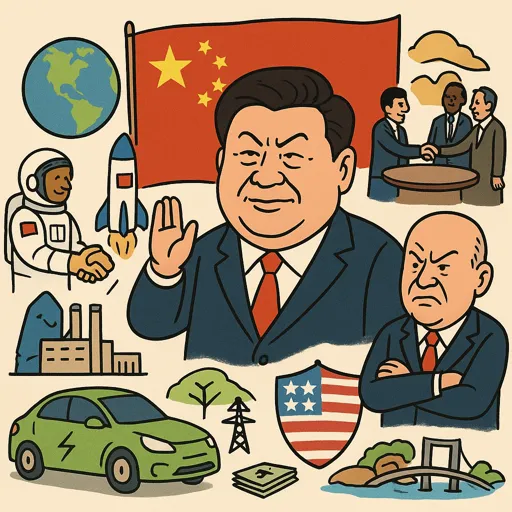
China in 2026 is characterized by a robust expansion of its technological, economic, and diplomatic influence, marked notably by advances in space cooperation with Pakistan and ASEAN countries, significant strides in electric vehicle-related industries, and a strategic approach to trade and tariff challenges with the United States. Concurrently, China faces intense legal and geopolitical confrontations with the U.S., especially concerning Huawei and broader tech sector disputes, while also asserting itself through diplomatic summits with major powers and regional infrastructure projects in Africa and the Pacific. This dynamic landscape reflects China’s dual role as a growing global power promoting regional integration and cooperation, while navigating contentious trade disputes, security concerns, and internal political scrutiny.
Multiple reports highlight the U.S. government's preparation to impose higher tariffs on China along with other global economies, reflecting ongoing tensions over subsidies, industrial support, and trade imbalances. These tariff hikes risk disrupting global supply chains and have prompted analysis of potential retaliations and market volatility. The U.S.-China economic relationship is thus marked by escalating protectionist measures and legal contestations that frame broader geopolitical rivalries.
Huawei faces a series of convictions and legal setbacks in the United States involving charges like money laundering, theft of trade secrets, fraud, and violations related to Iran sanctions. These rulings signify a strong US stance against Chinese tech firms amid concerns over national security and intellectual property. Huawei rejects the allegations, emphasizing legal flaws and pledges to contest verdicts, illustrating the deepening legal and political tensions between China and the US tech sector.
China’s Shenzhou-24 mission, notable for including the first foreign astronaut from Pakistan, underscores expanding international cooperation in space exploration. Multiple articles cover successful launch events, the historic participation of a Pakistani astronaut, and collaborations with ASEAN partners, signaling China's intent to bolster its space program’s international dimension and scientific diplomacy efforts.
China is actively strengthening trade, infrastructure, and digital connectivity with ASEAN countries, Africa, and specific nations such as Togo, Laos, and Tajikistan. Initiatives include ASEAN-China Week, logistics hubs proposals, and new business corridors, reflecting China’s goal to enhance regional integration and economic cooperation. Cultural diplomacy efforts, such as film festivals in Liberia, also play a role in fostering goodwill and soft power.
Investigations into high-ranking officials close to Xi Jinping, ongoing anti-corruption campaigns, and severe punishments for espionage highlight tightening internal political controls and governance reforms within China. Additionally, China responds firmly to espionage cases and emphasizes media objectivity in foreign relations. These internal developments coincide with external security concerns and reflect an assertive governance approach amid evolving geopolitical stresses.
Trilateral summits involving China, the US, and Russia produce joint peace declarations and shared stances on international legal institutions like the ICC, showcasing China's role in shaping multilateral diplomacy. Discussions on global security issues including Ukraine and Iran demonstrate China's strategic engagement with major powers to influence global stability and regional affairs. These diplomatic events signal both cooperation and rivalry within emerging world order negotiations.
Joint military exercises with Cambodia and shifting security pacts in the Pacific reflect China’s increasing military footprint and its competitive regional influence against actors like Australia. These developments indicate China’s intent to assert security leadership within Asia-Pacific and adjacent areas, aligned with its broader geopolitical ambitions.
China is advancing in AI-enabled manufacturing and adapting to shifting international tech landscapes, facing challenges from U.S. chip controls impacting ASEAN data centers and AI players. Strategic long-term responses to American technology restrictions reveal China's commitment to sustaining technological growth and securing supply chains amid global regulatory pressures.
Initiatives like China Film Month in Liberia and media engagement efforts exhibit China’s soft power approach to improve its international image and bilateral ties. Alongside strong diplomatic messages urging media objectivity, these efforts aim to counteract negative perceptions amid heightened global scrutiny.
Recent earthquakes affecting several Chinese provinces continue over multiple days, prompting emergency responses and damage assessments. Additionally, concerns over political freedoms in Hong Kong echo domestic stability challenges. These events reflect internal vulnerabilities amid China’s outward global expansion.